
Stewardship and the Long View
Why the best homes are designed not for opening day, but for decade twenty.
A home is the largest investment most people will ever make. Not just financially – though that’s true – but in time, in attachment, in the accumulation of memory and meaning. A house built thoughtfully can shelter a family for generations. A house built carelessly becomes a series of problems to solve, each one eroding the pleasure of ownership. The difference isn’t always visible on move-in day. It reveals itself over years, in how the building ages, how it responds to care, how much attention it demands versus how much peace it provides.
This is what stewardship means in architecture: designing with the long view in mind, making choices today that will compound positively over decades. It’s not about building monuments or spending beyond reason. It’s about understanding that every material, every detail, every system will be tested by time – and specifying accordingly. A stewardship approach produces homes that look better at twenty years than at two, homes that reward modest care with lasting performance, homes that become more valuable as they age rather than merely older.
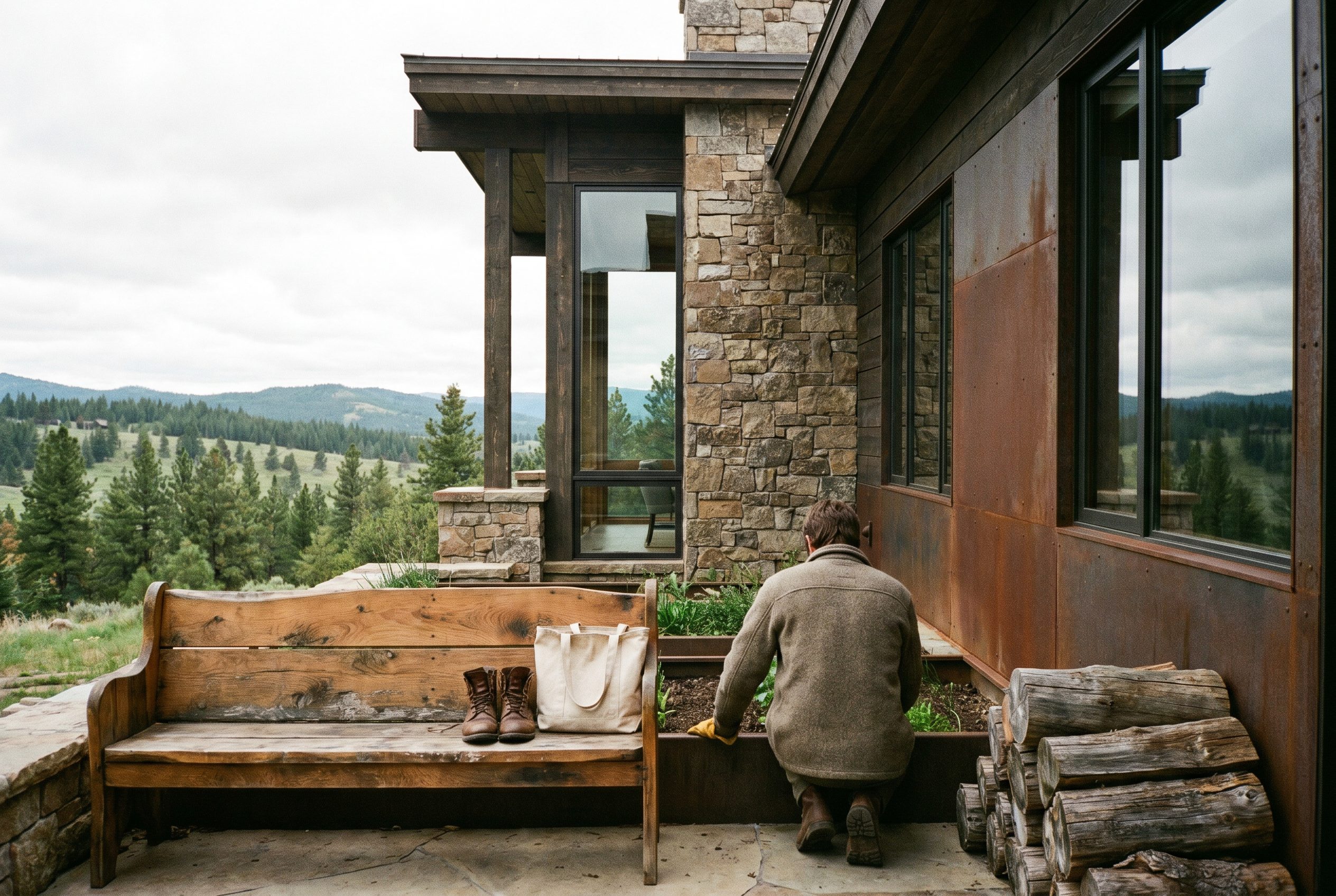
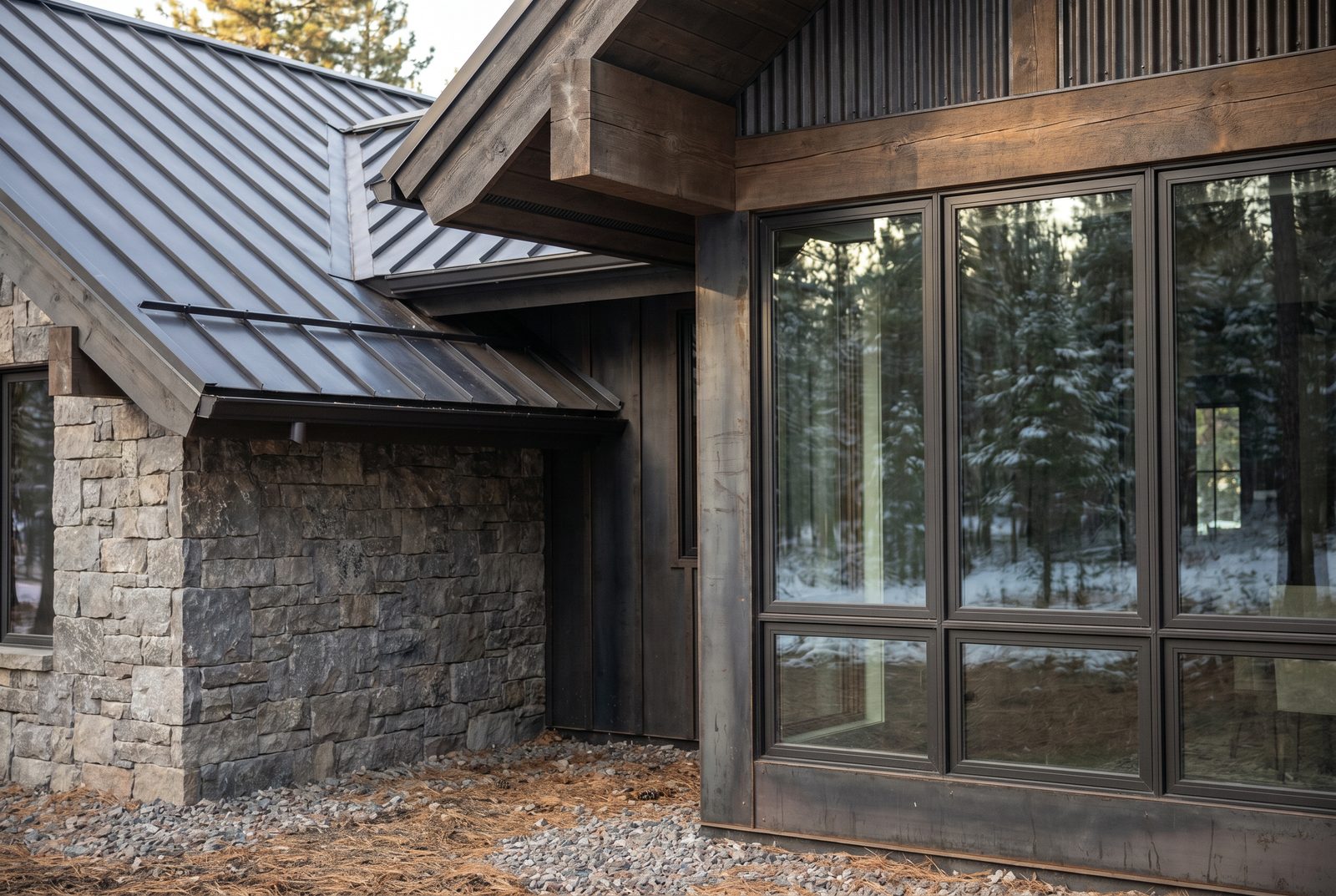
Materials matter most. Some materials announce their age through failure: cracking stucco, peeling paint, warping composites that looked fine in the showroom but couldn’t handle real weather. Others develop patina – a visual record of time that enhances rather than diminishes. Stone darkens and settles into its setting. Metal weathers to stable oxides, beautiful in ways the raw material wasn’t. Wood silvers with the seasons. These are materials with a second act, and they reward owners who understand that aging and deterioration are not the same thing. In the American West’s demanding climate – intense UV, dramatic temperature swings, freeze-thaw cycles that punish any weakness – material selection matters even more. We specify what we know will perform: metal roofing that sheds snow and resists fire, masonry and plaster that handle moisture without complaint, thermally modified wood that won’t rot, stone that has already weathered millennia.
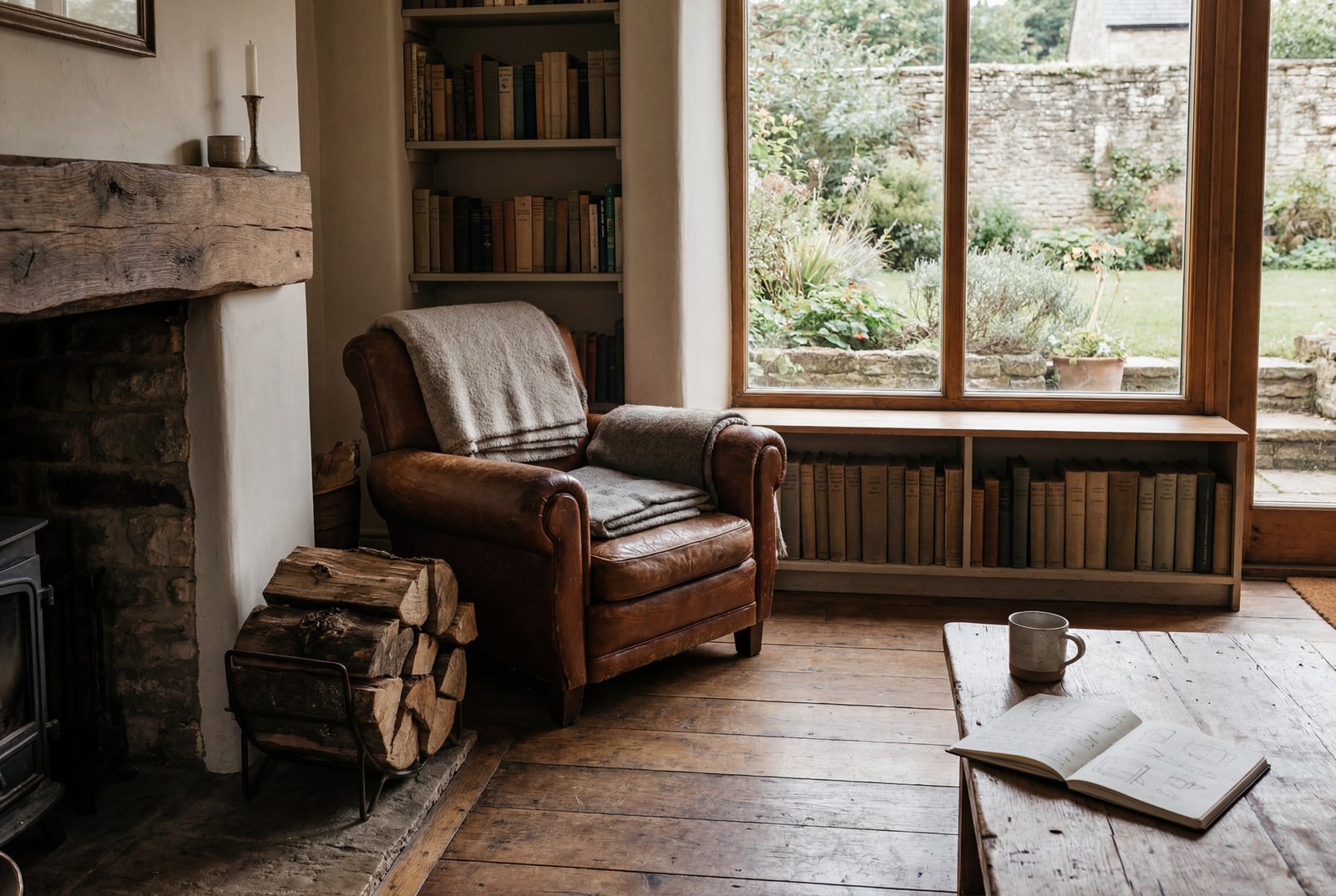
Details determine durability. The places where materials meet, where inside meets outside, where heavy use concentrates – these are the details that separate buildings that age well from buildings that don’t. We use stone or tile where walls meet floors in high-traffic entries. We specify solid wood or metal at corners that will take abuse. We detail flashings and sealants so they can be maintained without scaffolding. We think about what happens when the threshold wears, when the deck boards need replacing, when the window caulk reaches end of life. A detail that fails gracefully and can be repaired without heroics is a detail designed for stewardship. A detail that requires demolition to fix was never designed at all – it was merely drawn.
Systems should be accessible. Every home has mechanical systems that need service – filters to change, valves to exercise, equipment to inspect. The question is whether that service is straightforward or requires moving furniture, climbing ladders, or opening walls. We design mechanical spaces with generous clearances, logical layouts, clear labeling. A service technician arriving for the first time should be able to understand the systems without archaeology. A homeowner should be able to change a filter without calling for help. This is architecture too, even if it never appears in photographs.
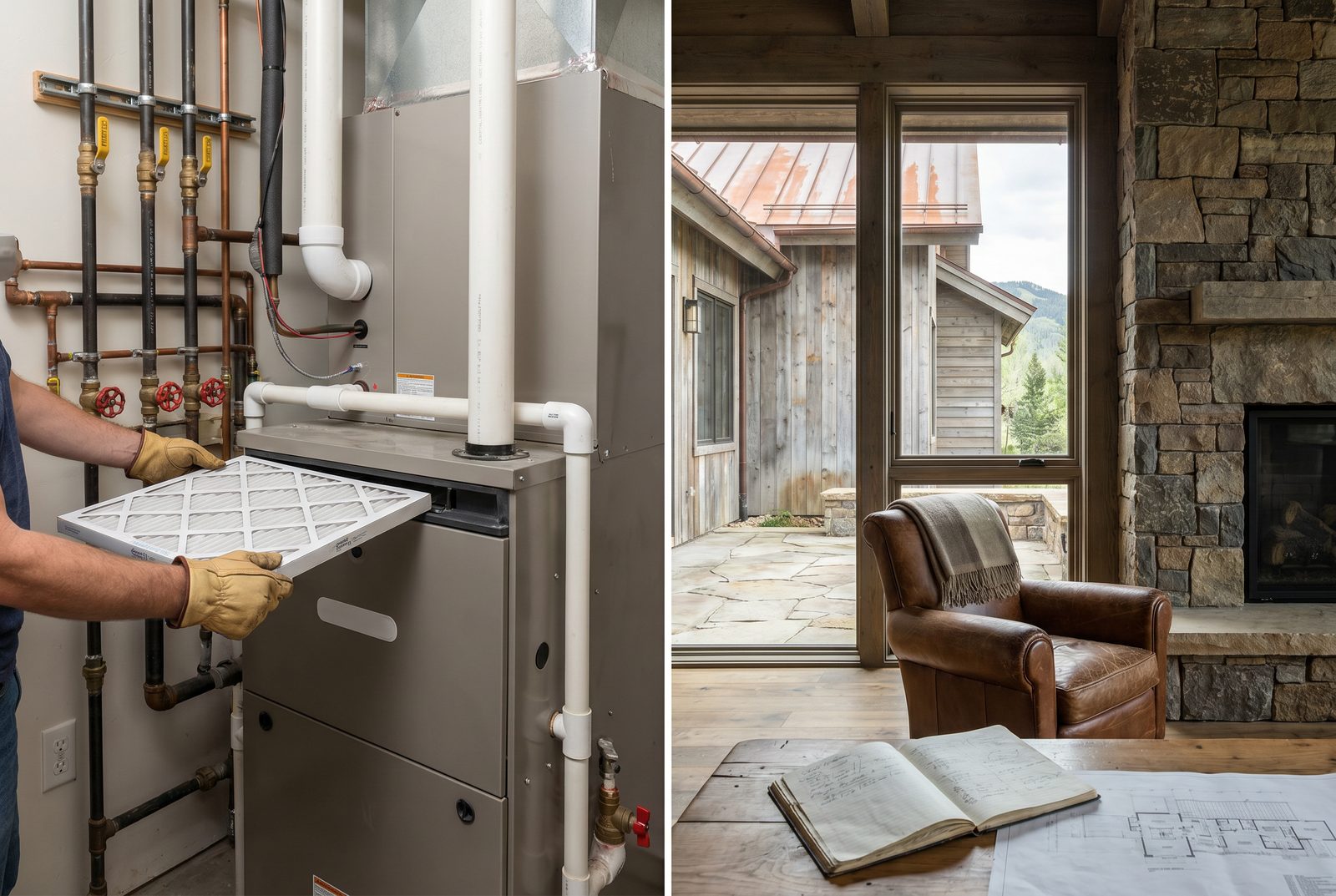
Documentation preserves intent. Years after construction, questions arise. What color is that paint? What size filter? Who installed the irrigation? What was the reasoning behind this detail? We compile this information at project end – material specifications, equipment manuals, finish formulas, contractor contacts, maintenance schedules – creating institutional memory for the building. This isn’t a warranty binder to sit in a drawer. It’s a reference that makes future decisions easier, that helps preserve design intent through changes of ownership or management, that treats the building as something worth understanding rather than just occupying.
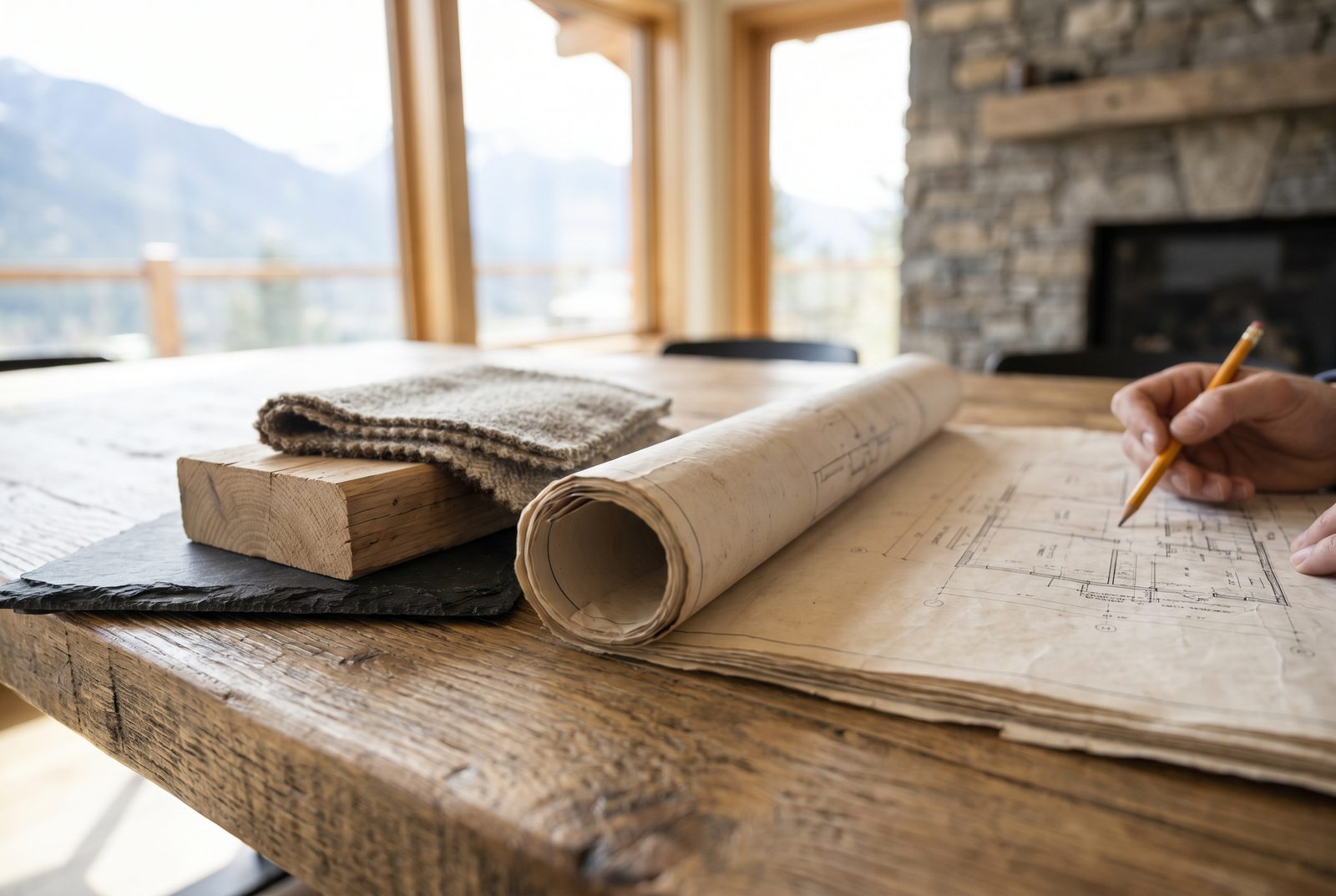
The alternative is disposability. Much of contemporary construction treats buildings as products with limited shelf lives – built to a budget and a timeline, with the assumption that someone else will deal with the consequences. We reject this approach. A home built for stewardship assumes the building matters, that it will be inhabited for generations, that decisions made today will compound over decades. This doesn’t require unlimited budgets. It requires clarity about what matters: durability where durability counts, maintainability where maintenance will be needed, candor about how materials and systems actually perform over time.
The homes that feel most valuable aren’t necessarily the largest. They’re the ones that work – quietly, reliably, year after year. They’re the ones that reward attention with lasting beauty rather than demanding attention to stave off decline. They’re the ones designed by people who asked not just “how will this look?” but “how will this age?” This is the long view. This is stewardship. And this is how we approach every project we take on.